8.1The decision belongs at plan stage此一決定屬於測量圖階段
此一決定屬於測量圖階段The decision belongs at plan stage
Everything in chapters 1 to 7 is settled before the first apartment is sold, by the survey plan and the first community management statement. After registration the options narrow sharply and the cost of each one rises. The developer's advantage is that the consent requirements in section 171 do not bite on the first statement: the original owner allocates exclusive use areas at will, because there is nobody yet to dissent.第一章至第七章所述的一切,均於首戶公寓售出之前,由測量圖及第一份社區管理聲明所決定。登記之後,可選項目急遽減少,且各項的成本均隨之上升。開發商的優勢在於第171條的同意要件不適用於第一份聲明:原始業主得任意配置專用使用區域,蓋此時尚無人得表示異議。
That advantage is spent once. It should be spent deliberately.此一優勢僅能行使一次,故應審慎為之。
8.2Choosing the structure架構的選擇
架構的選擇Choosing the structure
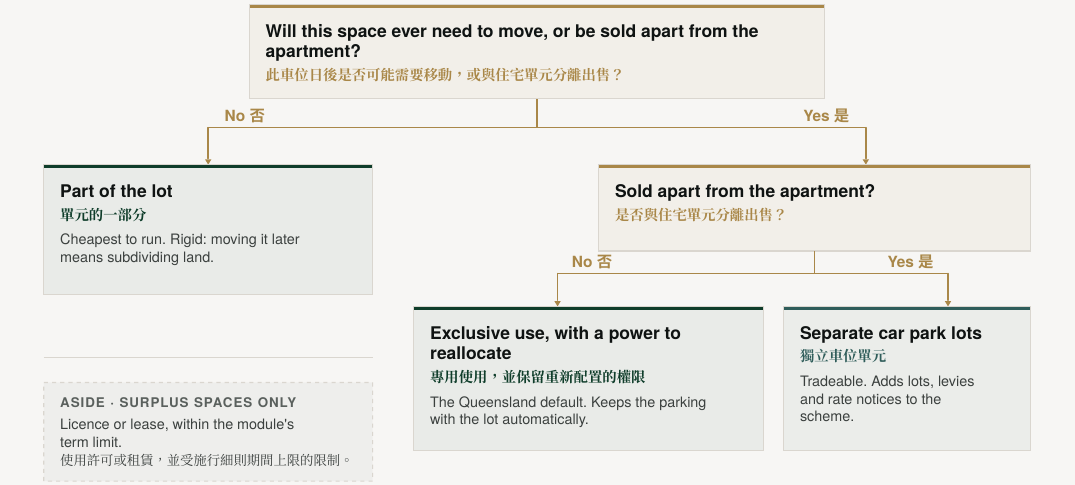
- Exclusive use suits almost everything else, and is the default in Queensland residential schemes. It keeps the scheme simple and keeps the parking with the apartments, provided the by-law is drafted to allow reallocation.
- A licence suits surplus spaces only. It should never be the structure for the parking a purchaser is paying for.
- 專用使用適用於幾乎其餘所有情形,並為昆士蘭住宅計劃的常態。只要管理規約的擬定容許重新配置,此一方式即可維持計劃架構簡明,並使車位與住宅單元保持結合。
- 使用許可僅適用於多餘車位,絕不應作為買方付費取得之車位的架構。
8.3Staging and later allocation分期開發與嗣後配置
分期開發與嗣後配置Staging and later allocation
In a staged development the developer will not know at first registration which lot each space should serve. The answer is an exclusive use by-law that identifies the parking areas and authorises the original owner to make allocations, with allocations then made and notified as each stage settles (ss 174 to 176). Drafted properly this removes the need for a new statement every time a space changes hands.分期開發時,開發商於首次登記時無從得知各車位應歸屬何一單元。其解法為訂定專用使用管理規約,標定各停車區域並授權原始業主為配置,其後隨各期交割逐一作成配置並為通知(第174條至第176條)。擬定得宜者,即無須每逢車位易手即製作新聲明。
8.4Development approval conditions開發許可條件
開發許可條件Development approval conditions
The approval sets the floor. It will specify minimum numbers of resident and visitor spaces, often their location and dimensions, and sometimes that they must remain unallocated or unobstructed. Nothing done in the community management statement can override it, and a scheme that allocates spaces the approval requires to be visitor parking has created a problem that survives every subsequent sale.開發許可設定了底線。其將指明住戶車位與訪客車位的最低數量,往往並指明其位置與尺寸,有時且要求其須保持未經配置或無障礙的狀態。社區管理聲明中的任何安排均不得凌駕其上;計劃若將開發許可要求作為訪客車位者予以配置,即製造出一個歷經其後每一次出售仍將存續的問題。
8.5Tying a car park lot to an apartment使車位單元與住宅單元相互連結
使車位單元與住宅單元相互連結Tying a car park lot to an apartment
Developers regularly ask for separate car park lots that cannot be sold away from the apartments they were sold with. Queensland does not offer a clean way to do this. A by-law cannot prevent or restrict a transmission, transfer, mortgage or other dealing with a lot (s 180), which disposes of the obvious approach.開發商經常要求設置不得與其原併同出售之住宅單元分離出售的獨立車位單元。昆士蘭並無簡潔的方法達成此一目的。管理規約不得阻止或限制單元的移轉、轉讓、抵押或其他處分(第180條),此即排除了最直接的作法。
What is left is weaker and needs to be chosen with open eyes: contractual restraints in the sale contracts, which bind only the original buyer; amalgamating the car park into the apartment lot so that there is nothing separate to sell, which defeats the purpose of having a separate lot at all; or accepting exclusive use instead, which achieves the tie automatically because the right attaches to the lot. In most residential projects the third answer is the right one.其餘可行者均較為薄弱,選用時必須明知其限制:於買賣契約中設定契約性限制,然其僅拘束原始買方;將車位合併入住宅單元,使其不復為可單獨出售之標的,然此已使設置獨立單元的目的落空;或改採專用使用,因該權利附加於單元而自動達成連結。在多數住宅專案中,第三種答案才是正確的。
8.6Drafting failures worth avoiding值得避免的擬約瑕疵
值得避免的擬約瑕疵Drafting failures worth avoiding
When should a Queensland developer decide how car parks will be held?昆士蘭的開發商應於何時決定車位的持有方式?
At plan stage. Everything about how a car park is held is settled before the first apartment is sold, by the survey plan and the first community management statement; after registration the options narrow sharply and the cost of each one rises. The developer's advantage is that the consent requirements in section 171 do not bite on the first statement, so the original owner allocates exclusive use areas at will because there is nobody yet to dissent. That advantage is spent once and should be spent deliberately.於測量圖階段。車位持有方式的一切,均於首戶公寓售出之前,由測量圖及第一份社區管理聲明所決定;登記之後,可選項目急遽減少,且各項的成本均隨之上升。開發商的優勢在於第171條的同意要件不適用於第一份聲明,原始業主得任意配置專用使用區域,蓋此時尚無人得表示異議。此一優勢僅能行使一次,故應審慎為之。
Which car park structure should a developer choose for a Queensland residential scheme?昆士蘭住宅計劃的開發商應選擇何種車位架構?
The guide's decision turns on whether the space will ever need to move or be sold apart from the apartment. Parking as part of the lot suits a development where every apartment has fixed parking and nobody will ever need to move it: cheapest to run, most rigid to change. Separate car park lots suit a development where parking will be traded, such as a mixed use building or a commercial podium, but they add lots to the scheme with all that follows. Exclusive use with a power to reallocate suits almost everything else and is the default in Queensland residential schemes, because it keeps the scheme simple and keeps the parking with the apartments; a licence suits surplus spaces only and should never be the structure for parking a purchaser is paying for.本指南的判斷取決於該車位日後是否可能需要移動,或與住宅單元分離出售。將車位納為單元的一部分,適用於每戶公寓均配有固定車位且日後絕無調整需求的開發案:運作成本最低,變更彈性最差。獨立車位單元適用於車位將被交易的開發案,例如混合用途大樓或商業裙樓,但將為計劃增加單元,並隨之產生一切相應後果。保留重新配置權限的專用使用適用於幾乎其餘所有情形,並為昆士蘭住宅計劃的常態,因其可維持計劃架構簡明,並使車位與住宅單元保持結合;使用許可僅適用於多餘車位,絕不應作為買方付費取得之車位的架構。
How does a developer allocate car parks in a staged Queensland development?在昆士蘭的分期開發中,開發商如何配置車位?
In a staged development the developer will not know at first registration which lot each space should serve. The answer is an exclusive use by-law that identifies the parking areas and authorises the original owner to make allocations, with allocations then made and notified as each stage settles (ss 174 to 176); drafted properly this removes the need for a new community management statement every time a space changes hands. The allocation power should not run forever: it should end when the last lot in the last stage settles, and the by-law should say so, because a dormant developer allocation power discovered years later is a bad surprise for a body corporate.分期開發時,開發商於首次登記時無從得知各車位應歸屬何一單元。其解法為訂定專用使用管理規約,標定各停車區域並授權原始業主為配置,其後隨各期交割逐一作成配置並為通知(第174條至第176條);擬定得宜者,即無須每逢車位易手即製作新社區管理聲明。該配置權限不應無限期存續:應於最後一期最後一個單元交割時終止,並於管理規約中明定,蓋多年後方被發現、仍處於休眠狀態的開發商配置權限,對業主法人團體而言是一項不利的意外。
Can a Queensland developer tie a separate car park lot to an apartment so it cannot be sold separately?昆士蘭的開發商能否使獨立車位單元與住宅單元相互連結,使其不得分離出售?
Queensland does not offer a clean way to do this. A by-law cannot prevent or restrict a transmission, transfer, mortgage or other dealing with a lot (s 180), which disposes of the obvious approach. What is left is weaker: contractual restraints in the sale contracts, which bind only the original buyer; amalgamating the car park into the apartment lot, which defeats the purpose of having a separate lot at all; or accepting exclusive use instead, which achieves the tie automatically because the right attaches to the lot. In most residential projects the guide says the third answer is the right one.昆士蘭並無簡潔的方法達成此一目的。管理規約不得阻止或限制單元的移轉、轉讓、抵押或其他處分(第180條),此即排除了最直接的作法。其餘可行者均較為薄弱:於買賣契約中設定契約性限制,然其僅拘束原始買方;將車位合併入住宅單元,然此已使設置獨立單元的目的落空;或改採專用使用,因該權利附加於單元而自動達成連結。本指南指出,在多數住宅專案中,第三種答案才是正確的。
What are the most common drafting mistakes in Queensland exclusive use car park by-laws?昆士蘭專用使用車位管理規約最常見的擬約瑕疵有哪些?
The guide lists failures seen in practice: an exclusive use by-law that identifies spaces by numbers appearing on no plan attached to the statement; an allocation to a named individual rather than to a lot, which does not survive the sale; exclusive use granted over an area containing utility infrastructure coupled with a maintenance obligation the owner cannot lawfully bear; no reallocation mechanism, so that two owners swapping spaces need a unanimous general meeting; Schedule E allocations that do not add up to the number of spaces on the plan, leaving spaces available to everyone; and visitor bays allocated or resident bays counted twice. The development approval sets the floor for resident and visitor spaces, and nothing in the community management statement can override it.本指南列出實務所見的瑕疵:專用使用管理規約以編號指稱車位,而該等編號並未出現於隨附於聲明的任何圖說之上;配置予具名個人而非配置予單元,於出售後即不復存在;就含有公用設施基礎設施的區域授予專用使用,並附加業主依法不得被課予的維護義務;未設重新配置機制,致兩位業主互換車位須經全體無異議的股東會決議;附表E的配置總數與圖上車位數量不符,致部分車位供全體使用;以及訪客車位遭配置,或住戶車位重複計算。開發許可就住戶車位與訪客車位設定了底線,社區管理聲明中的任何安排均不得凌駕其上。
This guide is general information about Queensland law. It is not legal advice and cannot be relied on as advice about any particular scheme, lot or transaction. Schemes differ, and the answer for any given car space is found in that scheme’s own survey plan, community management statement and body corporate records. Obtain independent Queensland legal advice before signing, settling, or changing a parking arrangement. Where the English and Chinese texts differ, the English text governs. 本指南為昆士蘭法律之一般性資訊,並非法律意見,亦不得作為就任何特定計劃、單元或交易的意見。各計劃情況不同,任何車位的答案,須從該計劃本身的測量圖則、社區管理聲明及業主法人團體紀錄中尋找。簽署契約、辦理交割或變更車位安排前,應取得獨立的昆士蘭法律意見。如中英文本有異,概以英文為準。